
Arrest Warrants in Loving County
Under the Texas Code of Criminal Procedure Chapter 15, an arrest warrant is a magistrate's written order telling a peace officer to bring in the person accused. Which court issues it depends on the offense. It could be the JP, the County Court, or the 143rd District Court. The clerk of that issuing court keeps the case record, and an officer's service paperwork sits apart from the court file itself. Loving County publishes no public arrest-warrant search and no sample listings, so confirm any matter with the court rather than trusting an empty online result.
What a Loving County Arrest Warrant Contains
Chapter 15 spells out the basics a warrant carries: the issuing magistrate, the accused person's name or description, the alleged offense, and the magistrate's signature. Around that core, a record may tie to a cause number, a complaint or affidavit, the issue date, service history, and any bond or release condition. Not every field shows up in a public copy. Loving County posts no sample warrant and no standard number format, so expect variation from case to case.
| Issuing authority | Magistrate or court with authority in the matter |
|---|---|
| Person description | Name or description used to identify the person accused |
| Offense | Alleged offense associated with the complaint |
| Case reference | Cause number or related charging record, if available |
| Execution and status | May be maintained in a separate court or agency record |
What Texas Chapter 15 Calls an Arrest Warrant
Chapter 15 ties issuance to a sworn complaint and a showing of probable cause under its provisions. The warrant orders that a person be taken into custody, and it reaches statewide under the statute's process. In Loving County as anywhere else, the case still belongs to the issuing court. Check it there.
Process distinction: A warrant authorizes an arrest. It does not decide the criminal charge, and a summons or notice may be used in some authorized situations.
For Loving County readers, the Texas Code of Criminal Procedure Chapter 15 is the state's core source on arrest warrants.
How Loving County Arrest Warrants Are Served
The sheriff, a constable, or another authorized peace officer may execute a warrant in Loving County. The Sheriff's Office lists 432-377-2411 as its main public number, though it is not a dedicated warrant line, and Constable Brandon W. Jones keeps a separate county contact. Neither contact replaces the court's own case record. The county publishes no public surrender hours or walk-in procedure, so ask the issuing court before you show up anywhere. The Constable's official county page explains the peace-officer role.
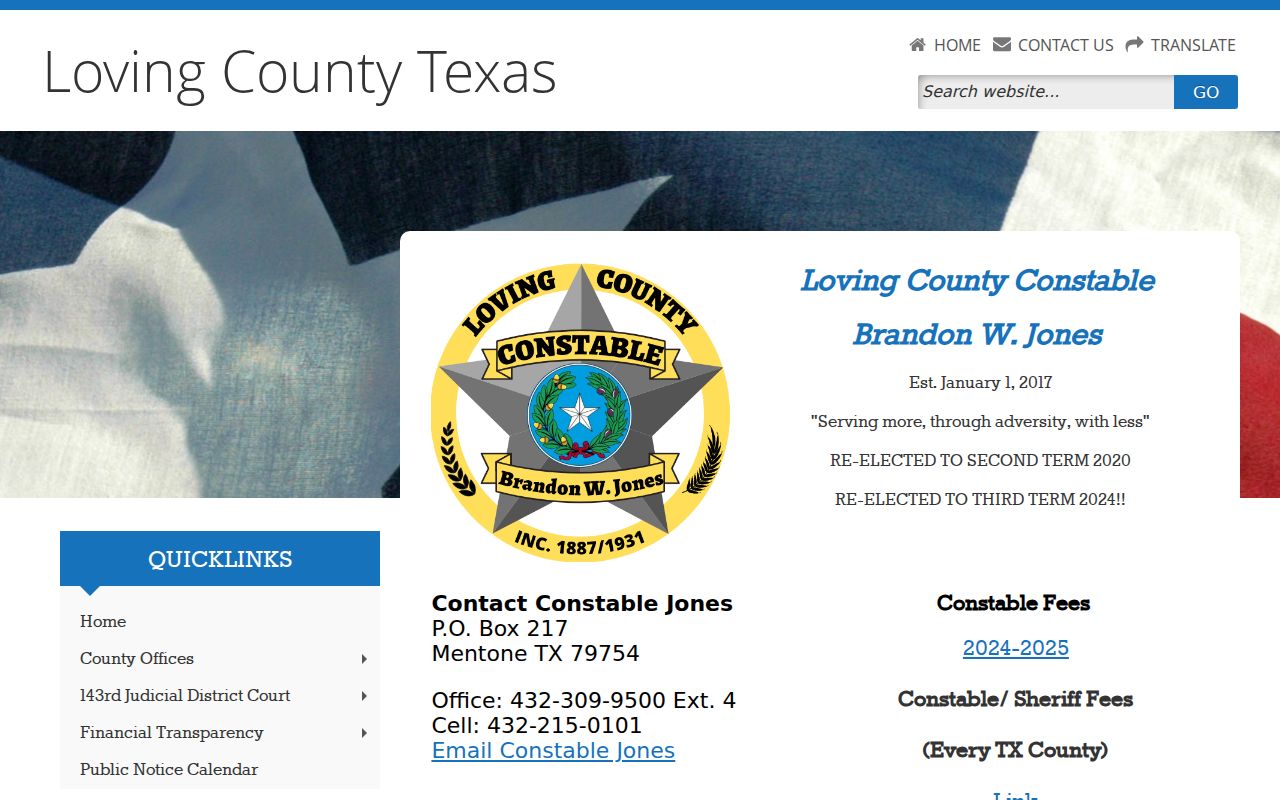
An officer's authority to serve process in Loving County does not make that officer the home of the case record. The court holds that.
The Loving County Arrest Warrant Route Depends on Case Level
Where a Loving County case goes depends on its level. Traffic and many Class C matters belong to the countywide JP, while the County Clerk keeps records assigned to the constitutional County Court. The 143rd District Court serves Loving, Reeves, and Ward counties, with its records held by the District Clerk, and its current court page lists the Monahans location. A Loving criminal matter may therefore take a court call outside Mentone. The District Clerk's page names Mozelle Carr and links to the district court record route.
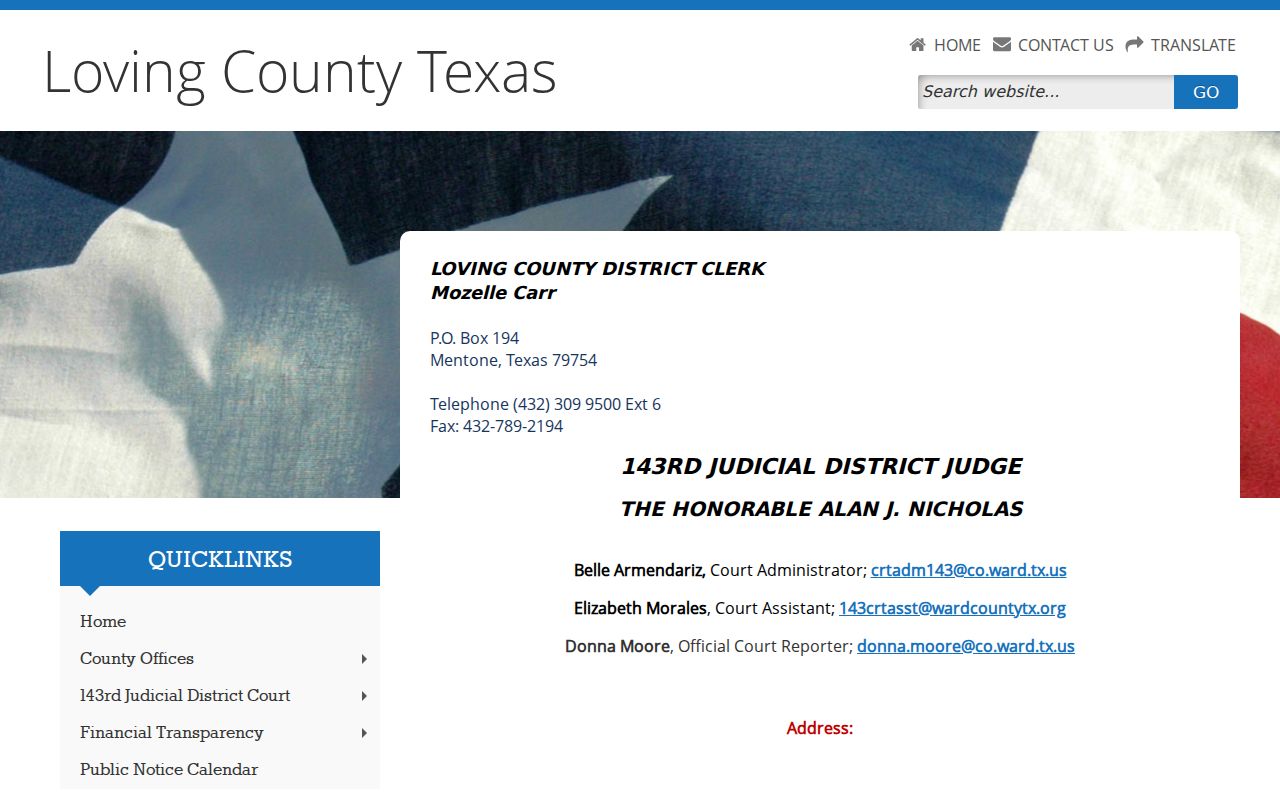
Confirm the court and its address before you travel to any Loving County matter. Phone and email routes may reach staff in different counties.
Arrest Warrant vs Summons vs Bench Warrant
These three terms describe different court actions in Loving County. A summons or notice directs a person to appear when the court authorizes it. A bench warrant is the common label for arrest process issued after a missed duty, such as a failure to appear. An arrest warrant, by contrast, follows a complaint and a probable-cause path. Ask the clerk which process the case actually records.
| Process | Purpose | What to Verify |
|---|---|---|
| Arrest warrant | Directs an officer to arrest a person | Issuing magistrate, case, and current status |
| Summons or notice | Calls for appearance in an authorized case | Date, court, and response required |
| Bench warrant | Common term for court arrest process after noncompliance | Exact process name and court-approved next step |
A Warrant Record Is Not a Loving County Conviction
A warrant is court process, not a verdict. A complaint or probable-cause finding falls short of proof at trial. In the same way, a dated arrest report is not a current inventory of active warrants in Loving County, and a docket marked closed may not reveal whether process was served, recalled, or superseded. Read each record for exactly what it says. Then ask the court what is still pending. The Eighth Court of Appeals page handles Loving County appeals, but it cannot confirm a trial-level warrant.
For the underlying matter, return to the issuing trial court or clerk.
What to Do If There's a Warrant for You
Call the court that issued the process and ask what status it records today. If the matter is criminal or an arrest could occur, speak with a licensed Texas attorney first. Loving County publishes no local surrender instructions, no bond schedule, and no warrant-recall form. An appearance, a bond, a hearing, or an attorney's motion may all work, but each depends on the court and the case. Get the court's instructions in plain terms, and ask for written confirmation once anything is done.
Before a walk-in: Do not assume that entering a courthouse or sheriff’s office for a name check is consequence-free. Ask counsel and the issuing court about the approved route.
The county overview’s resolution section summarizes the local court-first process and missing information.
No Loving County Warrant Search Can Rule Out Federal Process
Federal warrants live outside state and county court records. Loving County sits in the U.S. District Court for the Western District of Texas, Pecos Division. The public PACER Case Locator can surface available federal case records, though it is no warrant-status system, and sealed matters may not appear at all. Even a docket hit does not confirm an arrest order is still active. The federal clerk's official office page gives Pecos Division counter details. Confirm any federal matter with that clerk or a federal defense lawyer.
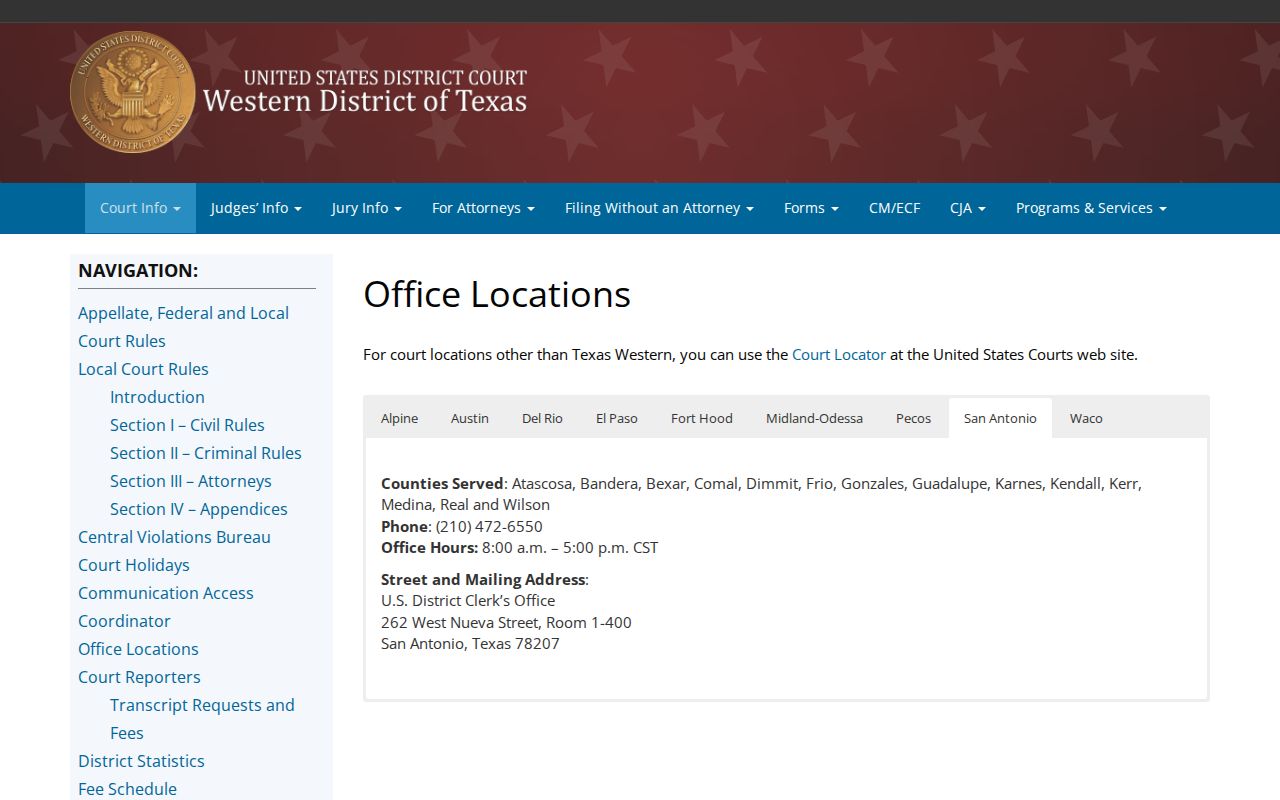
A state or sheriff search cannot answer a federal-process question.
An Old Citation Needs a Loving County JP Status Check
An old ticket in Loving County can turn into court process without your knowing it. Call the Justice Court at 432-286-9544 and ask for a status check. Ask whether the case has a number, too. Also ask what action the court accepts and how it confirms a resolution. The official not-guilty form is blunt: fail to appear and you risk bond forfeiture plus a warrant. The guilty and no-contest form lists payment plans and indigency options, but it never promises that filing it recalls process. If DPS shows a failure-to-appear or failure-to-pay issue, contact the court first. OmniBase only tracks license eligibility, so treat it as a route to driving relief rather than a full arrest-warrant check.