
How to Search for a Warrant in Loving County
No single portal covers every warrant type in Loving County. Match the case to the office that holds it. Justice Court handles many traffic and fine-only matters, the County Clerk keeps county-court files, and the District Clerk serves the 143rd District Court. The Sheriff, for its part, keeps its own service records. Call before you go: the sheriff's line is 432-377-2411, the JP clerk answers at 432-286-9544, and County Clerk Mozelle Carr is listed at 432-309-9500, extension 6. Once you reach staff, ask which record they hold and what they need from you. A citation or cause number plus an approximate date will narrow a warrant lookup fast. If an arrest could be involved, talk to a lawyer before you visit any office in person.
- Identify the likely court or citation type.
- Call the matching clerk and ask about the case file and current process.
- Ask the Sheriff’s Office about any operational record it maintains.
- Use an information request for copies or records, not as an instant status check.
- Verify the court’s approved next step and how resolution will be recorded.
The Sheriff Has No Loving County Warrant Search Form
The Loving County Sheriff's Office posts no public warrant-search tool. Its sitemap, forms page, and app page offer no warrant lookup, no active-warrant list, and no surrender form. The app page carries store badges marked "coming soon." That leaves the main sheriff phone number and the public-information email as the public channels. Even so, the office does not promise a phone name check or a walk-in search, so call before assuming either exists. The official county government sheriff page works as a contact directory and nothing more. It returns no warrant matches, and a blank result there proves nothing about whether a case exists.
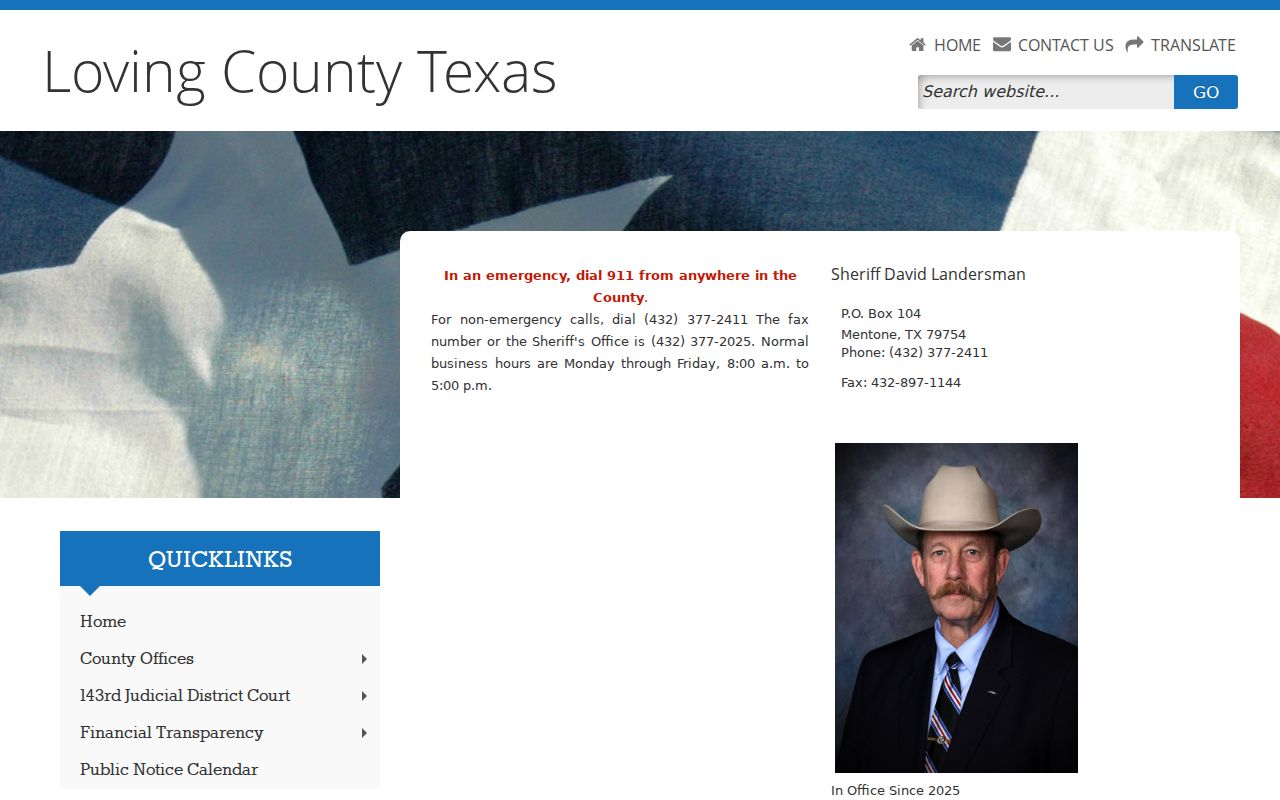
Call the listed Loving County office for current routing, and ask which court owns the underlying record.
Loving County Warrant Search Fields
Loving County offers no local warrant-search screen with fields to fill. When you call a court, share only what the clerk needs to find the file. Do not email sensitive identity documents unless the office approves a secure process.
| Case or citation number | Best starting detail when one appears on court paperwork |
|---|---|
| Legal name | Use the name attached to the court matter |
| Approximate date | Give the citation, hearing, or arrest date if known |
| Likely court | Justice Court, County Court, 143rd District Court, or federal Pecos Division |
| Question | Ask for case status and approved next steps, not a legal opinion |
Re:SearchTX Is a Loving County Court Trail, Not a Live Warrant List
Texas re:SearchTX can show available cases, filings, hearings, and documents after you register or sign in. Its official guide describes search and filter tools. Coverage of Loving County criminal matters is not complete, though, and the portal does not guarantee it. Think of it as a trail through available court records. It is not a statewide warrant database. An empty result still deserves a call to the clerk. The official re:SearchTX entry page may require sign-in or registration, and document access varies by case and record type.
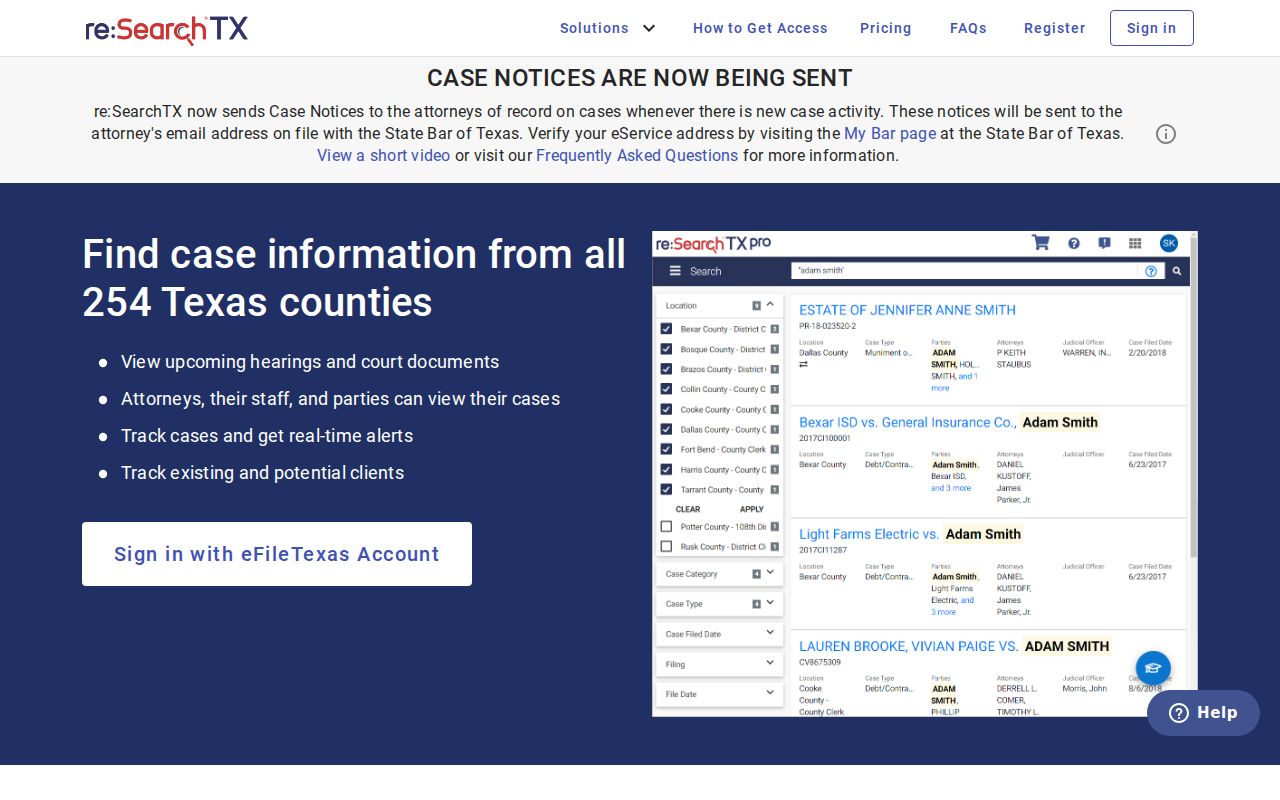
For a court-file trail, use the portal with the right case details. Then confirm the record with the Loving County court that owns it.
What a Loving County Warrant Search Returns
No single official search covers every Loving County warrant. Each route returns something different. A clerk may identify a case file. A sheriff response may cover only its own service records. A state notice result may point to a citation or filing rather than an arrest order. The Texas DPS failure-to-appear program deals with license eligibility and reported matters, not every warrant type.
| Route | What It Can Help Locate | What It Cannot Prove Alone |
|---|---|---|
| Issuing court or clerk | Case file, hearing, payment, or court process | Records held by another court or agency |
| Sheriff | Its operational and service records | Every court’s live case status |
| re:SearchTX | Available case and filing material | Complete criminal or warrant coverage |
| DPS OmniBase | Reported FTA/FTP license issue | All active warrants or court processes |
To understand why no active list is published, see the Loving County active-warrant page. It explains the gap in plain terms.
General Clerk Search Is Not a Loving County Warrant Search
The clerk website advertises a general public-record search covering documents and property resources. That service is not a criminal active-warrant list. A separate recorder portal is login-oriented and does not serve as a warrant tool. So do not run a land-record search and treat the result as a court-status answer. The clerk's public-record page spells out the service's scope. For Loving County court files, contact the clerk; the JP or District Clerk handles the other court levels.
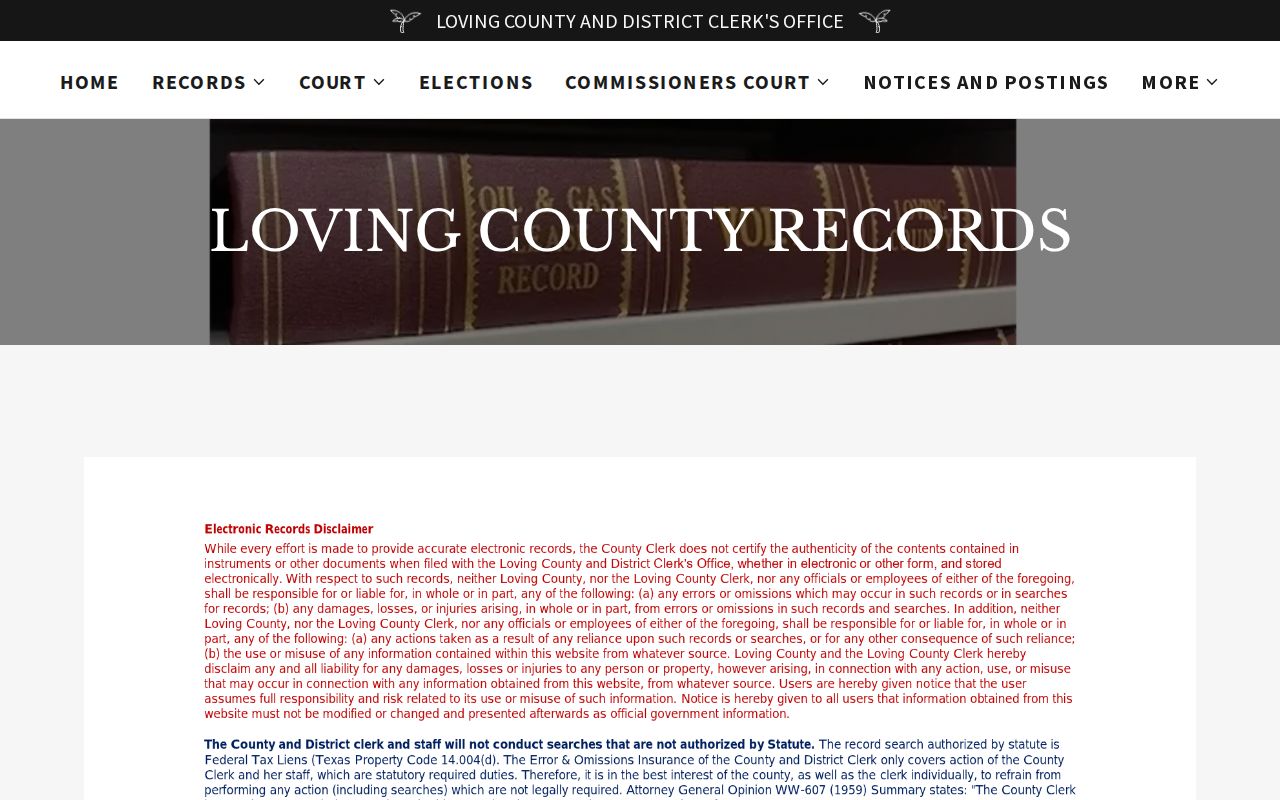
A court case record and a land-record search are different systems. Both may live on a clerk website, but only one speaks to a Loving County warrant question.
Where Loving County Warrants Are Checked
Traffic and Class C questions start with the countywide Justice Court. The county and district clerks each keep records for their own court levels. The 143rd District Court serves Loving, Reeves, and Ward counties, so a district matter may mean a call to Monahans instead of a trip to the Mentone counter. The Sheriff and Constable execute process. Only the issuing court controls recall, bond, and the case's final outcome.
Loving County District Clerk
143rd District Court records
400 S Allen, Suite 200, Monahans, TX 79756
432-943-2749 ext. 5
A Recording Checklist Does Not Clear a Loving County Warrant
The clerk site also posts a checklist for recording a document. That checklist covers recording steps and fees, not warrant confirmation, bond, or clearance. A recording fee is never a warrant-resolution price. No local warrant-check fee or universal recall fee is published in Loving County. The official recording checklist shows the office's scope, not a criminal-records process.
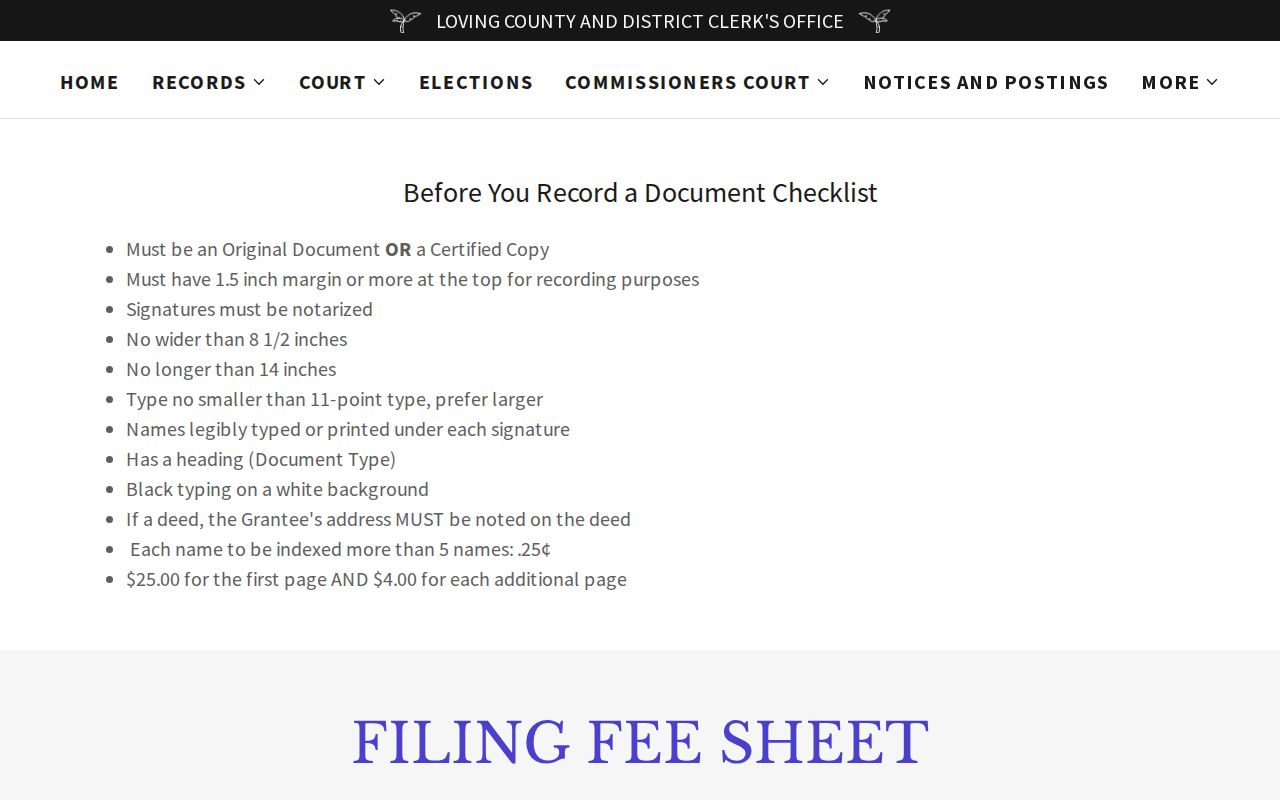
Ask the correct Loving County court about case costs, any bond, and how to verify a final court action.
Access and Restricted Warrants
The Texas Public Information Act, Government Code Chapter 552, opens public records to you subject to exceptions. Some walls are real. An active investigation, a juvenile matter, a sealed record, a court order, or another confidentiality law can block release. Juvenile arrest-warrant information gets special protection under Family Code Chapter 58. Search-warrant affidavits follow separate Chapter 18 timing rules, so they do not behave like an arrest-warrant list. A non-result can mean the record is not public, not digitized, held by another office, or outside a portal's coverage. Ask the clerk whether a redacted or non-exempt record can be provided.
Request clearly: Name the agency, record type, date range, and requested format. Ask for a fee estimate and any releasable portion if an exception applies.
Send a Loving County Public-Information Request for Records
The Loving County sheriff labels the page “FOIA Request,” but Texas state law actually governs it through the Texas Public Information Act. Three email addresses appear there: sherifflandersman@co.loving.tx.us, cfielder@co.loving.tx.us, and lpearson@co.loving.tx.us. Keep your request narrow. Name the record type and the date range. Ask for electronic delivery, and request a written estimate before any charges accrue. The sheriff's page posts no local fee schedule. It lists no ID rule either, and no promised response time. A request can reach an existing record, like a redacted log or an aggregate count, but the office need not build a new database or certify anyone's legal status. Court files belong with the clerk who holds them, so Loving County requesters should route those elsewhere.